Gooty Sapphire Ornamental (Poecilotheria metallica)
Last updated: May 13, 2026
This is not a care guide. If you are interested in keeping this species, please research its husbandry thoroughly before purchasing. Tom's Big Spiders has species-specific husbandry notes that are a solid place to start.
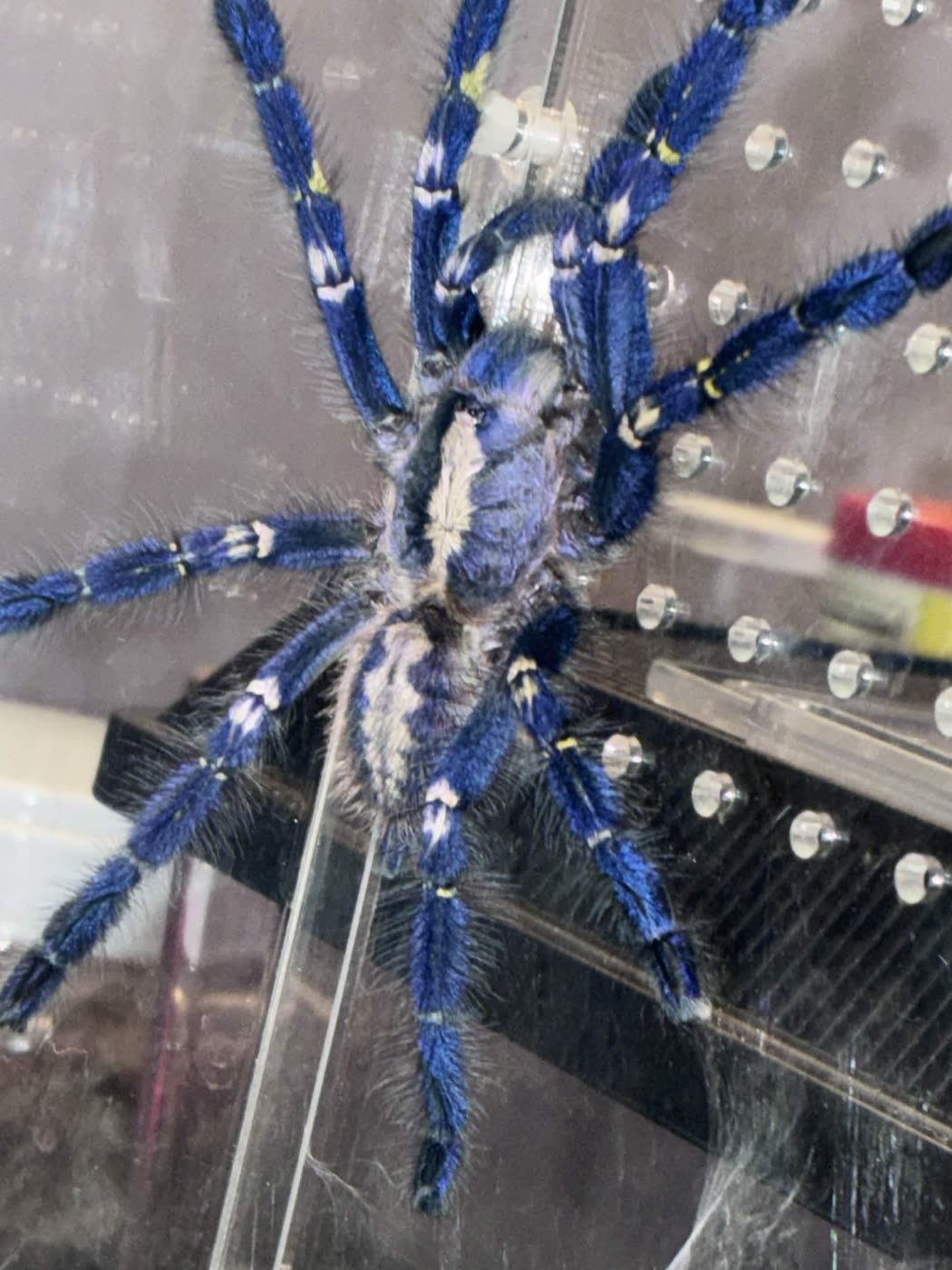
Poecilotheria metallica is in genuine competition for the title of most visually impressive tarantula in the hobby. The coloration is a deep, metallic cobalt blue across the legs and body with intricate geometric patterning that is unlike anything else available. It looks as though someone designed it to be as visually striking as possible. It is native to a very small area of forest in the Andhra Pradesh state of India and is critically endangered in the wild.
Most legally sold P. metallica in the hobby are captive-bred. As a Poecilotheria, the species falls under CITES regulation, meaning legal trade requires documentation and legitimate sellers should be offering captive-bred stock. Strong demand has driven captive breeding efforts that have made it more available over the past decade. It is still more expensive than most comparably sized tarantulas, but prices are more accessible than they once were.
This Is an Old World Species
The Gooty sapphire is not just visually different from most beginner-recommended tarantulas. It is categorically different in how you approach keeping it. As an old world species, it has no urticating hairs. Its defense is entirely speed, evasion, and biting. The venom of Poecilotheria species as a group has received more documentation than most tarantulas because of the frequency of keeper bites, and the effects reported are more significant than a typical new world. Systemic symptoms including muscle cramps have been documented from Poecilotheria bites. It is not considered life-threatening for healthy adults, but it is genuinely unpleasant and warrants taking seriously.
The speed is also real. Arboreals tend to be faster than terrestrials, and P. metallica is fast even by arboreal standards. Combined with the defensive behavior, this is a spider that requires consistent attentiveness.
The Arboreal Setup
This species needs a vertically oriented enclosure with height, cork bark or other climbing structure, and a secure top. It will spend most of its time elevated, and a setup that does not accommodate that produces a stressed, unhappy spider that hides at the bottom and does not display the behavior you want to see. The enclosure needs to be taller than wide, with a secure latch. A fast arboreal in an enclosure that can be opened accidentally is a problem.
Is This a Good Fit for You?
This is one of the most rewarding species in the hobby for keepers who are ready for it. The coloring is genuinely exceptional. Adult females retain their striking blue coloration well; mature males may differ in intensity. A well-established P. metallica in an appropriate enclosure is a display animal that draws attention from anyone who sees it.
However, this is not a species for newer keepers. The combination of old world speed, defensive behavior, and a venom profile that is more significant than most tarantulas means it requires experience. The general recommendation is to have at least a year or two of experience with old world tarantulas before moving to Poecilotheria, and to start with a less expensive Poecilotheria species first if you want to get acquainted with the genus. Once you have that background, the Gooty sapphire is one of the most satisfying spiders in the hobby.
Current Prices
Poecilotheria metallica (Gooty Sapphire Ornamental) currently sells for between $98.00 and $499.00 in the United States, with a median asking price of $125.00 across 11 in-stock listings from 9 vendors. Price depends mostly on size and sex: slings sit at the low end, mature females at the high end.
| Cheapest listing right now | $98.00 |
|---|---|
| Typical price (median) | $125.00 |
| Most expensive listing | $499.00 |
| Listings in stock | 11 |
| Vendors carrying it | 9 |
In stock at: Grimoire Exotics, Jamie's Tarantulas, Micro Wilderness, Old Pueblo Exotics, Pacific Northwest Arachnids, Plumb's Exotics, Spider Shoppe, Vexotic Me, Wonderland Exotics. Compare every Poecilotheria metallica listing by price.
Prices as of October 14, 2026. Live figures in the table below.
FAQs
Is Poecilotheria metallica dangerous?
It is not considered life-threatening to healthy adults, but its venom is taken more seriously than most tarantulas in the hobby. Bites from Poecilotheria species have produced documented systemic symptoms including muscle cramps and localized pain. It should be treated with the same respect as any fast, defensive old world tarantula. Avoiding bites is the practical goal, not assessing how bad one would be.
Is the Gooty Sapphire good for beginners?
No. The combination of speed, defensive nature, old world venom profile, and arboreal lifestyle makes this a species for experienced keepers. Get comfortable with old world tarantulas in general, ideally including other arboreal species, before working up to P. metallica.
Why is Poecilotheria metallica so expensive compared to other tarantulas?
A combination of high demand (it is widely considered the most beautiful tarantula in the hobby), a small natural range and critically endangered wild population, and historically limited captive availability all drove prices up. Captive breeding has improved availability considerably, and prices have come down from the heights of 10 to 15 years ago, but it still commands a premium relative to comparable-sized species.
Do Poecilotheria have urticating hairs?
No. Like all old world tarantulas, Poecilotheria have no urticating setae. Their defense is behavioral: speed, threat displays, and biting. This is one of the key reasons why old world arboreals are considered more demanding to keep than their new world counterparts.