Brazilian Blue Tarantula (Lasiocyano sazimai)
Last updated: May 8, 2026
This is not a care guide. If you are interested in keeping this species, please research its husbandry thoroughly before purchasing. Tom's Big Spiders has species-specific husbandry notes that are a solid place to start.
Lasiocyano sazimai is a new world tarantula from a small region of Brazil, specifically the Chapada Diamantina plateau in Bahia state. It was formerly known as Pterinopelma sazimai before the genus was reclassified in 2023 (Galleti-Lima, Hamilton, Borges & Guadanucci), and you will still see it listed under its old name in some places. The reason people seek this species out is simple: a fully colored adult is one of the most vividly blue tarantulas you will find anywhere in the hobby.
The cobalt coloration is real, not a trick of photography. In person, under good lighting, a mature specimen is genuinely remarkable. That said, juveniles and slings start out much duller and develop their coloring gradually over multiple molts, so there is a patience component to the experience.
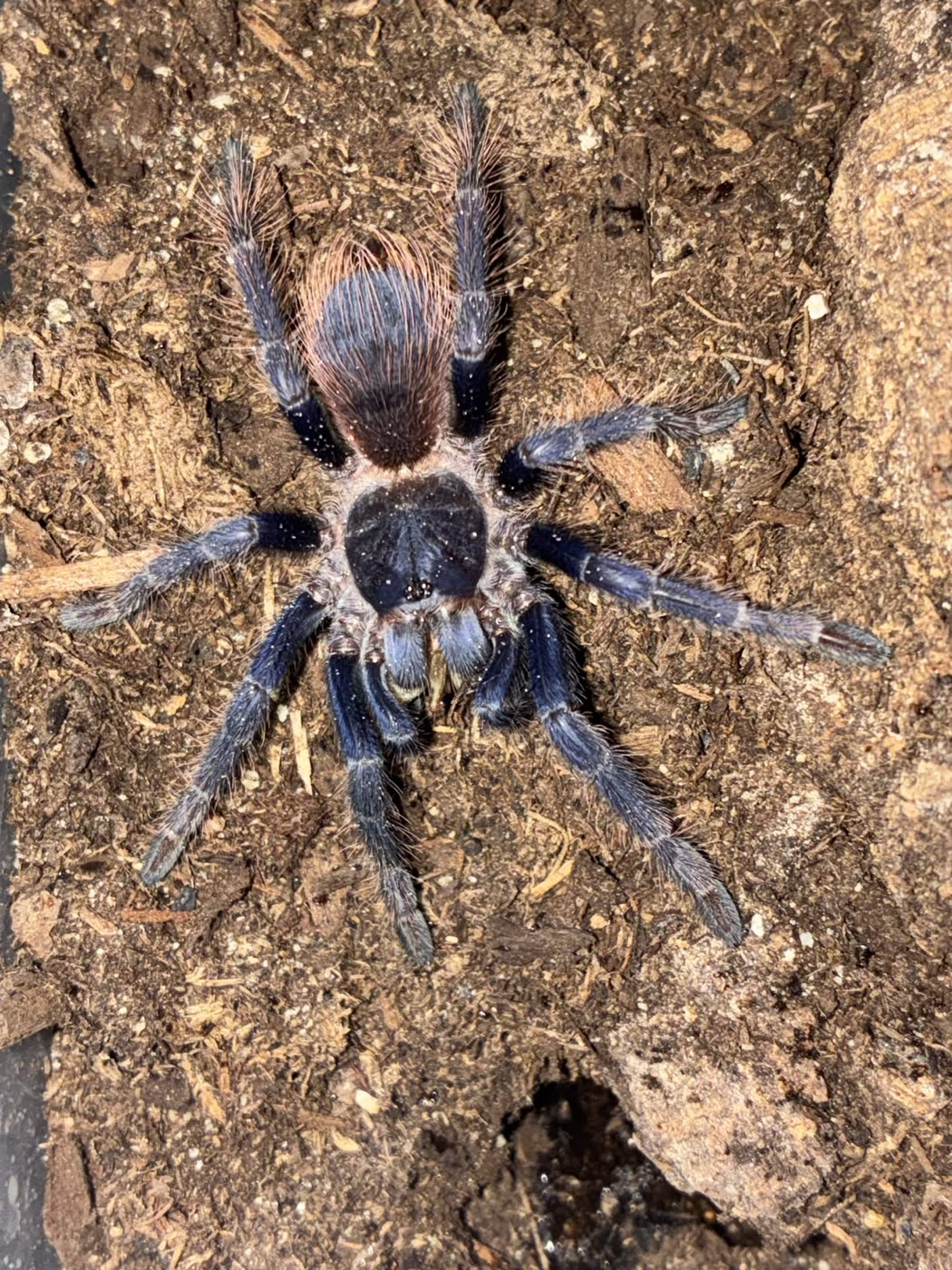
A New World Spider With a Striking Look
One thing worth noting is that L. sazimai is a new world species, native to Brazil. It has urticating hairs and venom that is relatively mild compared to old world options. This sometimes surprises people because the species has the kind of dramatic coloring more commonly associated with old world spiders. It is genuinely new world in terms of care approach and what to expect from its defensive behavior.
The species is terrestrial and opportunistically fossorial. In the wild it constructs burrows in rocky highland soils and retreats under rock shelters. It is moderately defensive but not among the more reactive species available. Approach maintenance with care and you should not have problems.
Is This a Good Fit for You?
If you want a genuinely beautiful spider and are willing to wait for the colors to develop, L. sazimai is hard to beat. The adult coloration is the payoff for a species that asks you to be patient through the juvenile phase. For keepers who appreciate working toward something visually impressive, this is a very satisfying species.
It is not a beginner species. Its moderate defensiveness and fossorial tendencies mean it can sometimes be deeper in its enclosure than expected when you go to work around it, and it warrants more care than a calm, ground-dwelling new world. But it is manageable for intermediate keepers who do their research.
The species is also endemic to a relatively small geographic area, which is worth knowing. This does not make it especially fragile in captivity, but it does mean that good husbandry matters more than it might with a broadly distributed, highly adaptable species.
If you want to add a "wow" species to an established collection, this is one of the top contenders in the hobby right now.
Current Prices
Lasiocyano sazimai (Brazilian Blue Tarantula) currently sells for between $15.00 and $299.00 in the United States, with a median asking price of $47.50 across 18 in-stock listings from 14 vendors. Price depends mostly on size and sex: slings sit at the low end, mature females at the high end.
| Cheapest listing right now | $15.00 |
|---|---|
| Typical price (median) | $47.50 |
| Most expensive listing | $299.00 |
| Listings in stock | 18 |
| Vendors carrying it | 14 |
In stock at: ArachnoEden, Big Z's, Buddha Bugs, Fear Not Tarantulas, Great Basin Serpentarium, Grimoire Exotics, Hardcore Arachnids, Josh's Frogs, Juice's Arthropods, One Love Tarantulas, The Spider Room, Ty Dye Exotics, Vexotic Me, Wonderland Exotics. Compare every Lasiocyano sazimai listing by price.
Prices as of October 14, 2026. Live figures in the table below.
FAQs
Is Lasiocyano sazimai the same as Pterinopelma sazimai?
Yes. The genus was reclassified in 2023 (Galleti-Lima, Hamilton, Borges & Guadanucci) and the species was moved from Pterinopelma to Lasiocyano. Both names refer to the same spider. You will still see the old name used in listings and care guides that have not been updated.
Why doesn't my Lasiocyano sazimai look blue?
Slings and early juveniles are not blue. The coloration develops gradually over multiple molts, and depending on where you are in the growth cycle your spider may look brown or generally dull. This is completely normal. Most keepers see their first real color payoff somewhere in the mid-juvenile stage, and it continues to intensify through adulthood.
Is Lasiocyano sazimai defensive?
Moderately. It is more defensive than a typical beginner new world tarantula but not nearly as reactive as most old world species. Standard careful husbandry practices are sufficient to work with this species safely. Go slow, be deliberate, and do not rush maintenance.
Is this a new world or old world tarantula?
New world. It is native to Brazil and has urticating hairs. Despite the striking blue coloration that might make someone think otherwise, it is a new world species with the care profile that implies.