Chilean Rose Hair (Grammostola rosea)
Last updated: May 8, 2026
This is not a care guide. If you are interested in keeping this species, please research its husbandry thoroughly before purchasing. Tom's Big Spiders has species-specific husbandry notes that are a solid place to start.
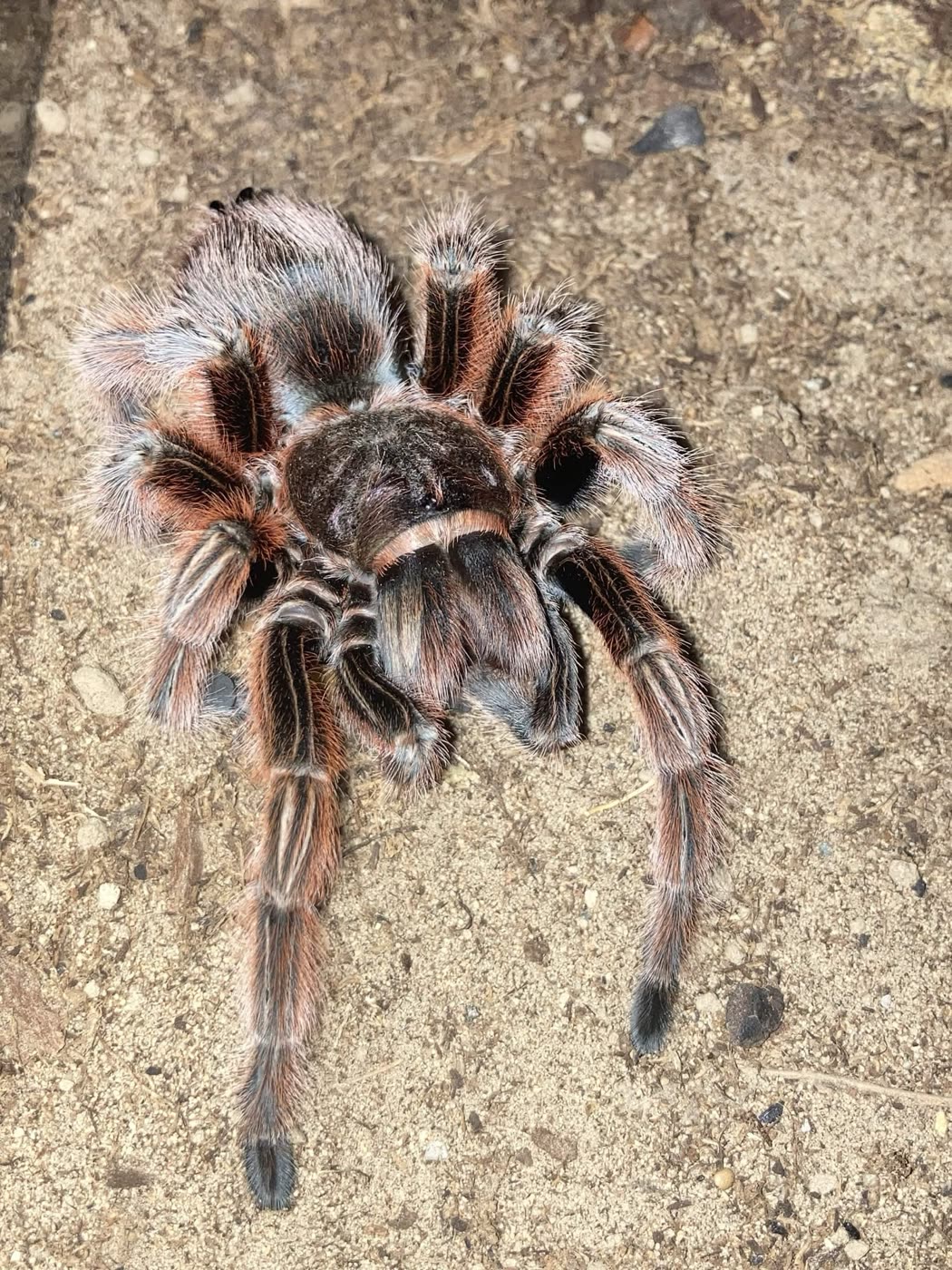
Grammostola rosea, the Chilean Rose Hair, might be the most widely recognized tarantula in the world outside of the hobby itself. For decades it was essentially the pet store tarantula, and it earned that reputation by being docile, hardy, long-lived, and easy to care for. I got my first tarantula in 2006 and it was a rose hair, so I have a soft spot for this species.
The species is native to Chile, Bolivia, and Argentina, living in dry scrubland and desert habitats. Females can live more than 20 years and reach around 5 to 5.5 inches in legspan. It is a genuinely beautiful spider with a soft pinkish-gray coloring that catches the light nicely.
The Fasting Thing
If you research G. rosea, you will quickly come across its reputation for refusing food. This species is famous for going off feed for months, and in some cases over a year. Experienced keepers understand this is normal behavior and not a sign of illness, but it catches first-time owners off guard consistently.
If you get a rose hair and it stops eating, do not panic. Keep fresh water available, leave the spider alone, and wait it out. The fast will end. Trying to force-feed or constantly disturb the enclosure to check on it will stress the spider more than the fast itself ever would.
RCF vs. Standard
You will often see listings for a "RCF" or Red Color Form alongside standard G. rosea. The RCF is a more vividly colored variant with richer reddish-orange tones, and it typically commands a higher price. Both are the same species with the same care requirements and the same temperament. If the deeper coloring matters to you, the RCF is worth the premium. If you just want a great rose hair, the standard form is perfectly beautiful.
Is This a Good Fit for You?
If you want a calm, forgiving, long-lived tarantula that you can observe at your own pace and is not going to surprise you, the rose hair is an excellent choice. It is one of the most tolerant tarantulas of occasional keeper mistakes, and it very rarely shows defensive behavior beyond the occasional hair kick.
If you want a species that eats enthusiastically on a regular schedule and is always visible and active, this one may frustrate you. The fasting and the occasional lengthy inactive period are real characteristics of the species, not problems to be fixed. Some keepers genuinely love the low-maintenance aspect. Others find the unpredictability of the feeding behavior concerning even when they know it is normal.
It is also worth noting that G. rosea is less commonly available from dedicated hobby vendors than it was 15 years ago when it dominated every pet store. You can still find them, but the hobby has diversified enormously and they are not as ubiquitous as they once were.
Current Prices
Grammostola rosea (Chilean Rose Hair) currently sells for between $39.00 and $450.00 in the United States, with a median asking price of $70.00 across 34 in-stock listings from 15 vendors. Price depends mostly on size and sex: slings sit at the low end, mature females at the high end.
| Cheapest listing right now | $39.00 |
|---|---|
| Typical price (median) | $70.00 |
| Most expensive listing | $450.00 |
| Listings in stock | 34 |
| Vendors carrying it | 15 |
In stock at: ArachnoEden, Buddha Bugs, FangzTV, Fear Not Tarantulas, Grimoire Exotics, Hardcore Arachnids, Micro Wilderness, Old Pueblo Exotics, One Love Tarantulas, Pacific Northwest Arachnids, Plumb's Exotics, Spider Shoppe, The Spider Room, Ty Dye Exotics, Vexotic Me. Compare every Grammostola rosea listing by price.
Prices as of October 14, 2026. Live figures in the table below.
FAQs
Why is my Grammostola rosea not eating?
This is extremely common and is almost certainly not cause for concern. G. rosea is known for extended fasting periods that can last months or even over a year in some cases. As long as the spider looks healthy, is not dramatically losing weight, and has access to fresh water, it is almost certainly fine. This is normal behavior for the species.
What is the difference between Grammostola rosea and the RCF?
The RCF (Red Color Form) is a more vividly colored variant with richer reddish-orange tones. The NCF tends toward a softer pinkish-gray. Both are the same species with identical care requirements and temperament. The RCF typically sells for more because of the more striking coloration.
The taxonomy here is worth knowing: the RCF is actually the original G. rosea. The NCF (Grammostola rosea ex. porteri) is the variant — G. porteri was made a junior synonym, which makes the NCF the non-standard form. The situation may not be fully settled, so treat this as the current understanding rather than a closed question.
How long do Grammostola rosea live?
Females can live 20 years or longer with proper care. Males have a considerably shorter lifespan, typically 5 to 10 years. This makes the rose hair one of the longer-lived species you will find regularly available in the hobby, and a serious long-term commitment.
Is Grammostola rosea good for beginners?
Yes, genuinely. Its calm temperament and hardy nature make it very forgiving of the kinds of mistakes new keepers make. The one thing to prepare for mentally is the fasting behavior. If you know that going in, it is one of the most straightforward species you can keep.
Related Species
- Grammostola pulchripes (Chaco Golden Knee) — another calm, hardy Grammostola with more consistent feeding behavior.