Mexican Red Knee (Brachypelma hamorii)
Last updated: May 8, 2026
This is not a care guide. If you are interested in keeping this species, please research its husbandry thoroughly before purchasing. Tom's Big Spiders has species-specific husbandry notes that are a solid place to start.
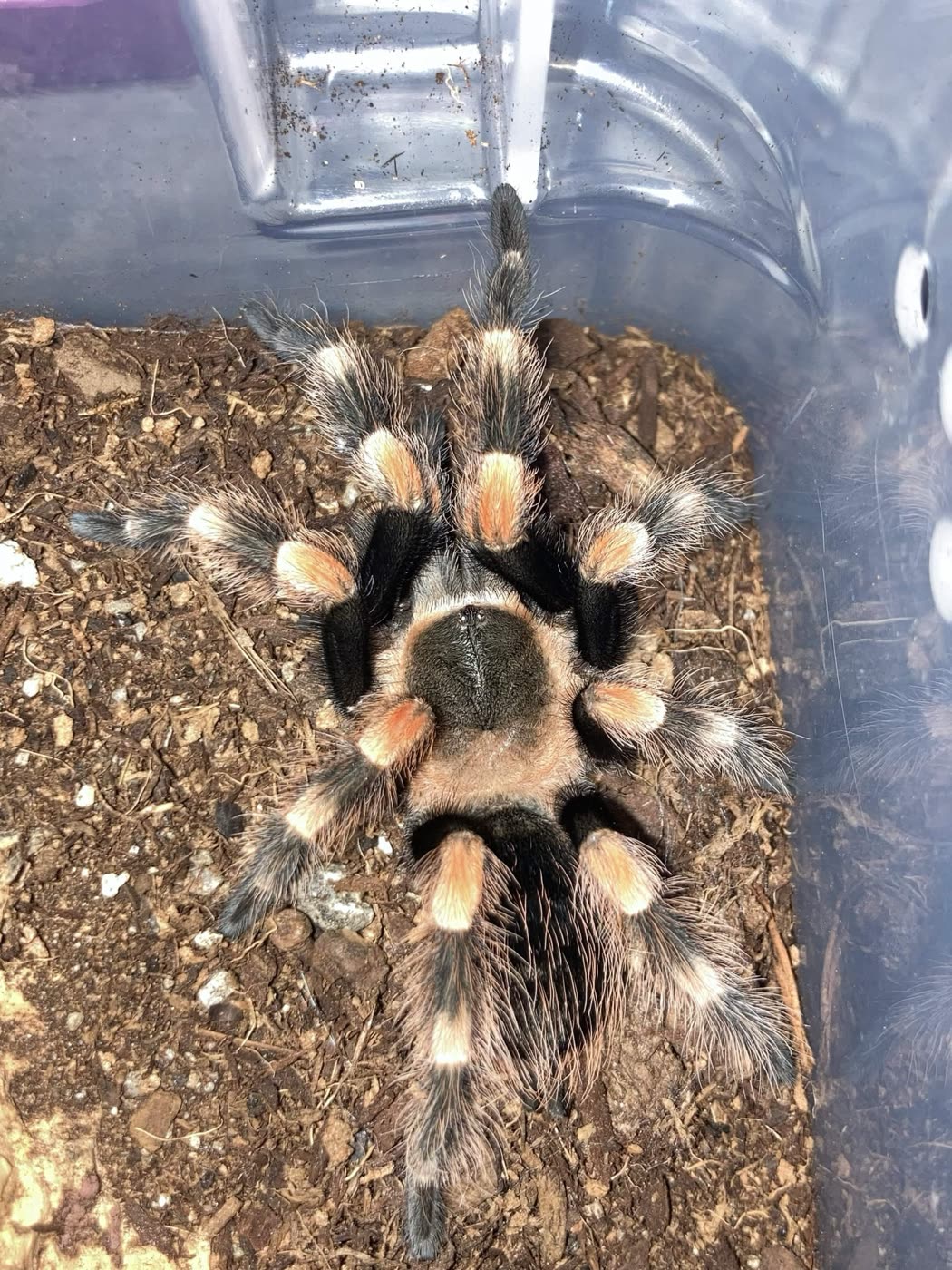
Brachypelma hamorii, the Mexican Red Knee, is probably the most recognizable tarantula in the world. The bold contrast of its black body against the orange-red banding on its legs has made it an icon: it has been in movies, on magazine covers, and in pet stores since the hobby's early days. There are people who have never thought about owning a tarantula who can still recognize a red knee on sight.
The species is native to the Pacific coast of Mexico, primarily in the states of Jalisco and Colima, where it lives in dry tropical scrubland. Females can live 25 to 30 years, making this one of the longest-lived tarantulas in captivity. It is a slow-growing species, so juveniles will take several years to reach adult size.
A Note on CITES and Wild Collection
B. hamorii is listed under CITES Appendix II, meaning international trade in wild-caught specimens is restricted. This status came as a result of the heavy collection pressure the species faced in previous decades when it dominated the pet trade. The vast majority of B. hamorii available from reputable US vendors today are captive-bred. That is actually a good thing: captive-bred animals are generally healthier, better established, and do not carry the ethical concerns of wild collection.
Is This a Good Fit for You?
The red knee is a legitimate beginner tarantula, and it is also a spider that experienced keepers are genuinely happy to have in their collection. It is calm, moves predictably, and is striking to look at. It is the kind of spider you can keep for decades and never tire of.
The slow growth is the one thing to be honest about going in. A sling will take years to reach adult size, and even a juvenile will need time. If you want something that grows noticeably month to month and changes quickly, other species will scratch that itch better. But if you want a stunning, long-lived centerpiece spider that will outlast most pets you will ever own, the red knee is hard to argue against.
Some individuals are reliable hair-kickers, which means the area around their enclosure can accumulate urticating setae over time. This is more of a nuisance than a danger, but it is worth knowing if you are sensitive to them.
Is it B. hamorii or B. smithi?
This confuses a lot of people, including experienced keepers who have been in the hobby a long time. Brachypelma hamorii and Brachypelma smithi are two distinct species that both get called "Mexican Red Knees". B. smithi is less commonly available in the hobby, and the vast majority of specimens sold under that name in the US are B. hamorii. If you are not sure which one you have, the range and pattern details differ slightly, and a reputable vendor should be able to tell you.
Current Prices
Brachypelma hamorii (Mexican Red Knee) currently sells for between $30.00 and $265.00 in the United States, with a median asking price of $65.62 across 26 in-stock listings from 16 vendors. Price depends mostly on size and sex: slings sit at the low end, mature females at the high end.
| Cheapest listing right now | $30.00 |
|---|---|
| Typical price (median) | $65.62 |
| Most expensive listing | $265.00 |
| Listings in stock | 26 |
| Vendors carrying it | 16 |
In stock at: ArachnoEden, Buddha Bugs, FangzTV, Fear Not Tarantulas, Hardcore Arachnids, Jamie's Tarantulas, Josh's Frogs, Micro Wilderness, Old Pueblo Exotics, One Love Tarantulas, Pacific Northwest Arachnids, Plumb's Exotics, Spider Shoppe, The Spider Room, Vexotic Me, Wonderland Exotics. Compare every Brachypelma hamorii listing by price.
Prices as of October 14, 2026. Live figures in the table below.
FAQs
Is Brachypelma hamorii legal to own?
Yes, in the US and most countries. The CITES listing restricts international trade in wild-caught specimens, but captive-bred B. hamorii can be legally bought and sold domestically without any permits required for the buyer. Reputable US vendors sell captive-bred animals.
How long does a Brachypelma hamorii live?
Females regularly live 20 to 30 years with proper care. Males live considerably shorter lives. Total male lifespan runs roughly 5 to 10 years, but post-maturity survival is typically around 1 year or less. This is one of the reasons a female red knee is considered a significant long-term commitment.
How big does the Mexican Red Knee get?
Females typically reach 5.5 to 6 inches in legspan, occasionally a bit larger. Males are noticeably smaller and slimmer at maturity.
Is it worth paying more for a larger juvenile vs. a sling?
That depends on your patience and budget. Slings are usually the most affordable entry point but take the longest to develop their full coloring and size. A larger juvenile or sub-adult gives you the faster payoff of an already impressive-looking spider. Given the species' slow growth, a lot of keepers find paying more for a larger specimen to be worth it.
Related Species
- Brachypelma boehmei (Mexican Fireleg) — the other commonly available Brachypelma, and a natural next species once you've kept a red knee.