Heating a Tarantula Room in a Cold Basement
Last updated: October 1, 2026
For most people keeping tarantulas, room temperature is fine. The majority of commonly kept species do well anywhere in the 70s, and if your living space is already there, you don't need a dedicated heating setup at all.
This is for everyone else. If you keep your collection in a basement, garage, or anywhere that doesn't stay reliably warm year-round, here's the exact setup I've been running in my basement invert room, including real power consumption data after several months of use.
The Setup
I converted one room of my unfinished basement into a dedicated invert room. Before anything else, I had an electrician install a dedicated circuit. Running a heater 24/7 is not something you want on a shared circuit, and this was worth doing right from the start.
For the heater I'm using a radiant oil heater paired with a temperature controller. The controller has a probe I hang in the air below my top shelf, set to 74°F with a 2 degree differential.
The Results
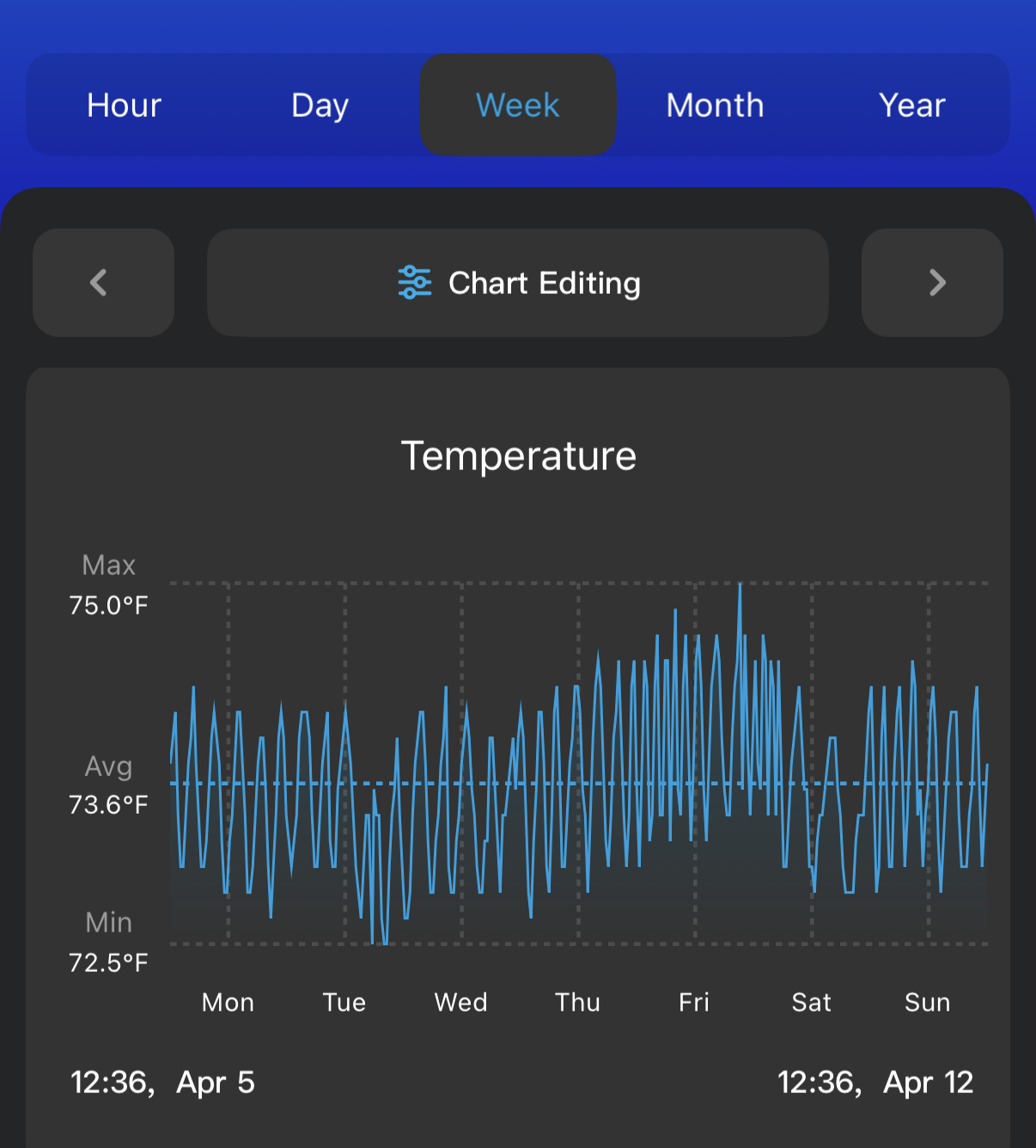
The temperature graph above covers a full week of readings: averaging 73.6°F with a range of 72.5 to 75.0°F. For a space that needs to stay in a consistent range year-round, that's about as good as it gets.
Power Costs
I've been tracking power consumption through a smart outlet since mid-March. Before that I estimated it from the heater's wattage and how often it was running, and the coldest winter days came out at around 20 kWh. The highest day I've measured was 20.5 kWh on March 18. In April it averaged about 10.5 kWh a day, and by July and August the heater barely ran at all.
Daily heater power use from the smart outlet, March 15 to September 30, 2026.
| Month | Total | Per day |
|---|---|---|
| March (15th on) | 261 kWh | 15.3 kWh |
| April | 314 kWh | 10.5 kWh |
| May | 206 kWh | 6.7 kWh |
| June | 57 kWh | 1.9 kWh |
| July | 11 kWh | 0.4 kWh |
| August | 14 kWh | 0.4 kWh |
| September | 33 kWh | 1.1 kWh |
Your costs will depend on your local electricity rate and how cold your winters get, but this should give you a reasonable baseline to work from.
Why This Approach Works
A radiant oil heater paired with an external temperature controller is a reliable combination for this use case because:
- Oil heaters retain heat well and cycle on and off less frequently than other heater types
- An external controller gives you more precise temperature management than the heater's built-in thermostat
- The dedicated circuit keeps things safe when running continuously
If you're setting up a dedicated space and looking to add to your collection, the price comparison tool on Tarantulalist aggregates listings from US vendors so you can find the species you want and compare prices in one place.
FAQs
What temperature should I keep my tarantulas at?
Most commonly kept tarantulas do fine anywhere in the low-to-mid 70s Fahrenheit. Some species from warmer climates are happier a few degrees higher, and some from cooler, higher-altitude environments tolerate the upper 60s just fine. If you're unsure about a specific species, look it up. Tom's Big Spiders has species-specific husbandry notes and is a good place to start.
Can I use a regular space heater instead of an oil heater?
I wouldn't. Fan-forced space heaters carry a higher fire risk when running continuously, which is exactly what you're doing in this scenario. They're not designed to run for extended periods continuously. Oil heaters are built for sustained use, radiate heat more gently, and are a much safer choice when a heater may be running for long stretches depending on how cold it gets.
Do I need an external temperature controller, or can I use the heater's built-in thermostat?
The built-in thermostats on most oil heaters are vague at best. They give you a range dial with no actual temperature readout, and they tend to run warmer than you'd expect. An external controller with a probe lets you set a precise target and differential, and it cuts power to the heater entirely when the room is warm enough. It's worth the small added cost.
Is a dedicated circuit really necessary?
For running a heater continuously, yes. A 1500-watt oil heater on a shared circuit alongside other appliances is a fire risk. Electricians charge less for this than most people expect, and it's a one-time cost that removes any concern about overloading a circuit while the heater runs 24/7 through a cold winter.
Can I use a heat mat or heat tape instead of a room heater?
I don't recommend heat mats for tarantulas. They can malfunction and overheat an enclosure with no way for the spider to escape the heat. Heating the room is safer even if you only have one tarantula. A spider needs to be able to move away from heat, and a heat mat takes that option away.
How do I know if my room is staying warm enough overnight?
A temperature data logger or a smart outlet with energy monitoring will tell you. I've been using a smart outlet to track power consumption, which gives a rough picture of how hard the heater is working. For actual temperature logs, inexpensive Bluetooth thermometers can track overnight readings and let you review them in an app the next morning.